
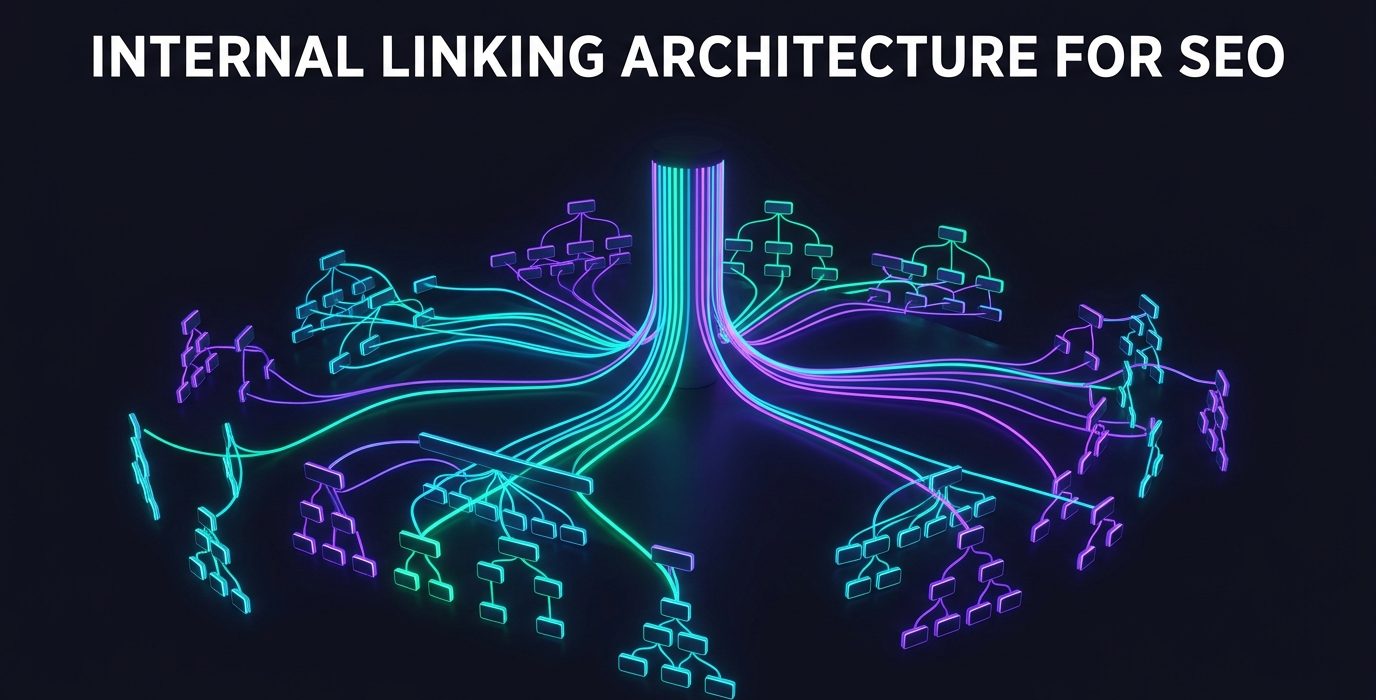
Internal linking architecture is the systematic arrangement of hyperlinks between pages on the same domain that distributes PageRank equity, clarifies topical hierarchy, and establishes unambiguous entity relationships for search engines. Without a structured linking topology, search engine crawlers struggle to discover deep content and fail to recognize which page represents the authoritative pillar for a topic.
Most websites treat internal linking haphazardly—authors insert random hyperlinks into blog posts whenever a related phrase comes to mind. This undisciplined approach dilutes link equity, induces keyword cannibalization, and creates orphan pages. In modern semantic search, internal links serve as the literal edges connecting concept nodes in Google’s Knowledge Graph representation of your website.
The 3 Pillars of Semantic Link Architecture
According to Google Search Central documentation, how pages connect to one another signals their relative importance and thematic focus. A high-authority architecture follows three rigid rules:
| Link Direction | Routing Purpose | Strategic Anchor Text Rule |
|---|---|---|
| Upward (Spoke to Pillar) | Passes sub-topic relevance to the core parent page | Descriptive exact or broad semantic match targeting the core entity |
| Downward (Pillar to Spoke) | Distributes domain equity down into detailed sub-guides | Specific long-tail anchor matching the spoke’s distinct intent |
| Lateral (Spoke to Spoke) | Guides users through logical sequential steps | Contextual reference used strictly within the same semantic cluster |
Why Cluster Isolation Prevents Ranking Cannibalization
A fatal mistake in enterprise SEO is linking indiscriminately across unrelated topical clusters. If an article detailing break-even ROAS calculations links randomly to five unrelated web design articles without semantic justification, it confuses algorithmic crawlers regarding the primary entity of the cluster.
Keep your clusters isolated: let your SEO spokes link back to your core semantic SEO pillar, and let paid search guides link upward to your paid advertising management services. When Google crawls within a well-defined silo, topical authority concentrates rather than scatters.
Anchor Text Optimization Without Over-Optimization Penalties
Unlike external backlinks where excessive exact-match anchor text can trigger spam filters, internal anchor text is expected to be clear, descriptive, and keyword-rich. Avoid generic labels like “click here” or “read more”. Always state the exact destination concept, such as our guide on how Google decodes entities.
Frequently Asked Questions
How many internal links should a 1,500-word post contain?
Aim for 3 to 6 highly contextual internal links per 1,000 words. Quality and contextual relevance vastly outweigh sheer link volume.
Do nofollow internal links help save crawl budget?
No. Using rel="nofollow" on internal links wastes PageRank rather than conserving it. If a page should not be indexed, use a noindex directive instead of nofollowing internal navigation.
Conclusion
PageRank is not dead; it simply flows through semantic channels. Building a disciplined internal linking framework ensures every piece of content you publish compounds the authority of your entire domain. Audit your site’s link topology or request a comprehensive technical SEO audit today.
[…] LLM training corpora and real-time RAG scrapers evaluate semantic sentiment and contextual entity co-occurrence, recognizing frequently cited brands as category leaders even when backlink anchor text is absent. For a comprehensive look at how search models process conceptual relationships, consult our architectural breakdown of modern semantic SEO strategy and our guide on internal linking architecture. […]
[…] An LTV:CAC ratio below 3:1 indicates unsustainable acquisition spend or severe customer churn; a ratio above 5:1 indicates under-investment in growth opportunities. For a comprehensive look at how search models process conceptual relationships, consult our architectural breakdown of modern semantic SEO strategy and our guide on internal linking architecture. […]
[…] Third-party tools rely on historical clickstream data and scraping samples, which routinely underestimate fast-emerging queries and completely miss long-tail conversational searches handled by AI Overviews. For a comprehensive look at how search models process conceptual relationships, consult our architectural breakdown of modern semantic SEO strategy and our guide on internal linking architecture. […]